Composition: Nylon, or polyamide, is a synthetic polymer known for its toughness, low friction, and resistance to wear and tear
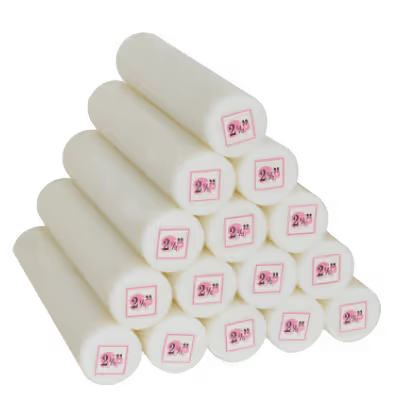
Available Forms: Nylon Rods - Cylindrical bars available in various diameters and lengths, Nylon Sheets - Flat sheets in a range of thicknesses and sizes
Colors: Typically available in natural (off-white), black, and sometimes other colors like blue or green, depending on specific applications
High Strength and Durability: Excellent tensile strength and impact resistance make Nylon ideal for heavy-duty applications
Wear and Abrasion Resistance: Low coefficient of friction ensures durability in applications involving sliding, rolling, or repeated contact
Chemical Resistance: Resistant to oils, fuels, and many industrial chemicals, though it may be affected by strong acids and bases
Lightweight: Lighter than metals, making it easier to handle and install while maintaining structural strength
Moisture Absorption: Nylon absorbs moisture from the environment, which can improve toughness but may affect dimensional stability in high-humidity conditions
Thermal Resistance: Performs well in moderate temperature ranges (-40°C to 120°C), making it suitable for a variety of industrial applications
Ease of Machining: Easy to cut, drill, and machine, enabling customization for specific requirements
Mechanical Components: Used for bushings, gears, pulleys, rollers, and bearings due to their excellent wear resistance and low friction
Electrical Industry: Insulating components such as spacers and insulators
Automotive: Fabrication of engine parts, fuel tank components, and under-the-hood applications
Construction: Flooring, partitions, and structural panels
Industrial Machinery: Used for wear plates, conveyor guides, and liners
Food Industry: Approved grades are used for cutting boards, conveyor parts, and food-handling equipment
Excellent Mechanical Properties: Strong and resilient under mechanical stress
Low Friction: Ideal for moving parts in machinery
Chemical and Oil Resistance: Extends lifespan in industrial environments
Lightweight: Easier to transport and install compared to metals
Cost-Effective: More affordable than many engineering plastics and metals